What It Will Take to Scale Seaweed Biostimulants
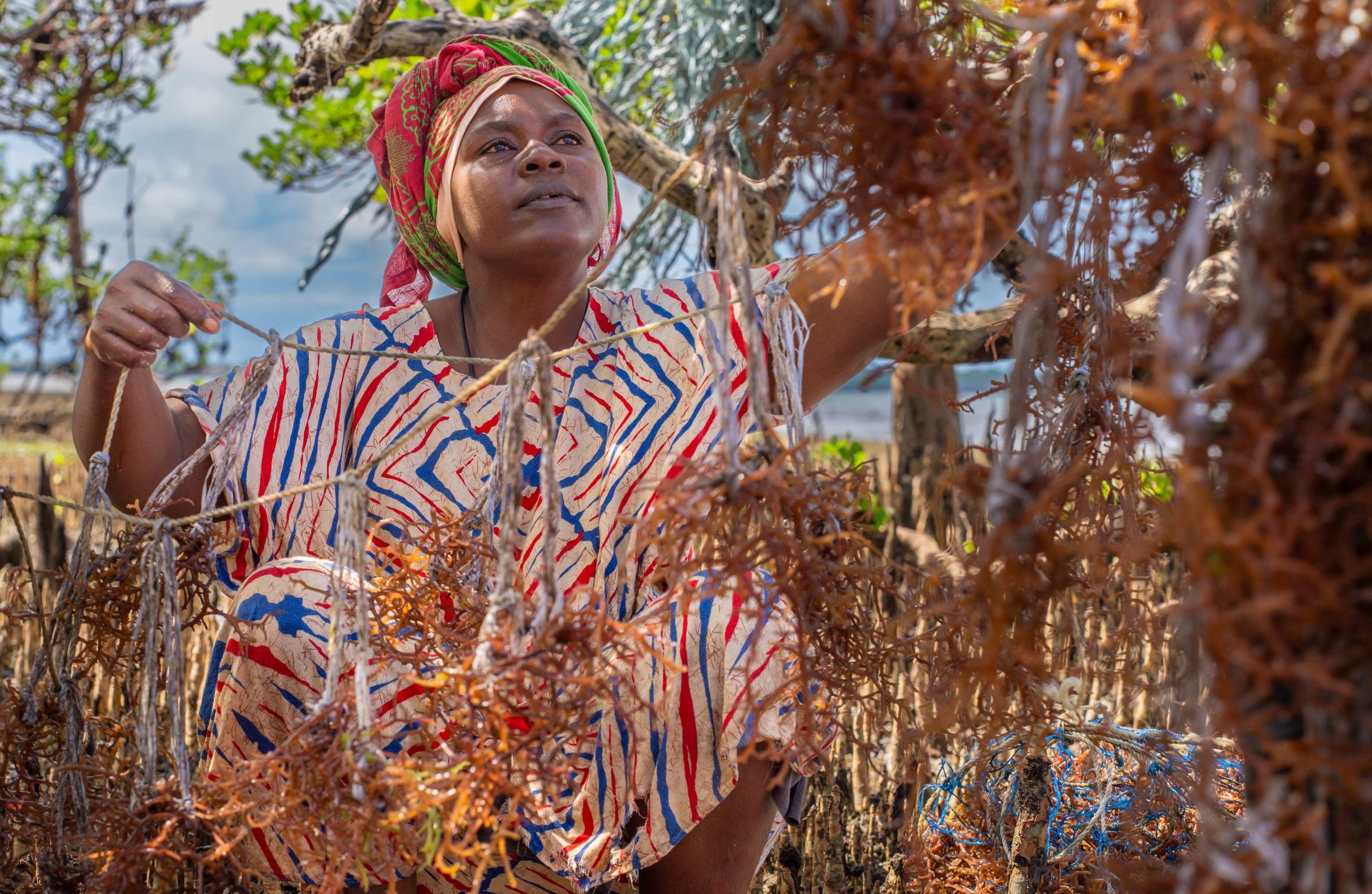
Seaweed aquaculture is an area of growing interest and potential globally; as a climate-resilient crop, a source of new agricultural and industrial inputs, and a livelihood for coastal communities. The open question is under what conditions the sector can continue to scale, and how to attract private investment to meet growing demand.
Reports from the International Finance Corporation, The World Bank, The Nature Conservancy, and our own Seaweed Insights work consistently point to biostimulants as one of the sector's highest-potential emerging applications for cultivated seaweed – a category already attracting interest from large industrial players.
Recently, Hatch Blue joined The World Bank and The Nature Conservancy to launch two new publications on exactly that: a White Paper and a companion guide for seaweed farmers entering the biostimulants market, detailing how seaweed biostimulants support agricultural performance and sustainability. Both come out of a roundtable the three organizations convened together with leaders from seaweed farming, agriculture, science, investment, and government.
Report findings suggest the opportunity is substantial: seaweed biostimulants were valued at over USD 1.4 billion in 2024 and are forecast to reach USD 2.4 billion by 2030. What's holding the category back – particularly for cultivated seaweed – includes inconsistent product standards, patchy regulation, and need for more efficacy proof points. Production data is also often inflated or hard to verify, making it harder for investors to make informed decisions.
A Blueprint for Scaling the Category
The report lays out five things it will take to close that gap: regulatory streamlining, R&D investment, enabling infrastructure, cross-sector collaboration (e.g agriculture and aquaculture), and financial mechanisms and incentives suited to where the industry is.
Scaling also means solving for reliability – proving a product performs the same batch to batch and season to season – and for revenue, since without it investors won't fund the capital expenditure cultivation needs. This means making cultivation bankable enough for debt, not just equity, so capital can move at the pace the opportunity demands.
Better Data to Back Growing Momentum
Seaweed products are drawing growing attention across industries, from fertilizer companies to pharmaceutical and cosmetics players alike. This traction is showing up across our own portfolio, too.
Coast 4C recently closed an oversubscribed USD 2.5 million seed round backed by our Blue Revolution Fund, connecting smallholder seaweed farmers in Southeast Asia to global buyers through a digital traceability platform. We're also an early investor in Symbrosia, whose seaweed-derived additive reduces methane emissions from cattle and which has since raised a series A to scale operations. MarinElixirs, operating in Tamil Nadu, India, grows, processes and formulates seaweed into high performance, science-backed products for large-scale agriculture. Its biostimulant products include granules, concentrates, powders and custom formulations that are certified organic.
It’s clear that better data, cross-sector collaboration and information sharing can help this sector reach its potential, especially in high potential but underserved emerging regions like Africa. That's also why we're currently developing Seaweed Insights Africa and looking for partners to help map the potential and build the data infrastructure needed to attract and inform investment.
Read the full Biostimulants White Paper and Farmer Brief here.
If you're looking to understand the innovation landscape on biostimulants, or to better understand seaweed production and supply reliability, get in touch with us.
By Peter Green, Hatch Blue – 24 July 2026
Photo credit: Hannah Packman
Related Posts
Where Is Capital Flowing in Norway’s Salmon Farming Landscape?
Maine: A Natural Hub for Blue Biotechnology
Canada's First Aquaculture Studio: What We Learned