Canada's First Aquaculture Studio: What We Learned
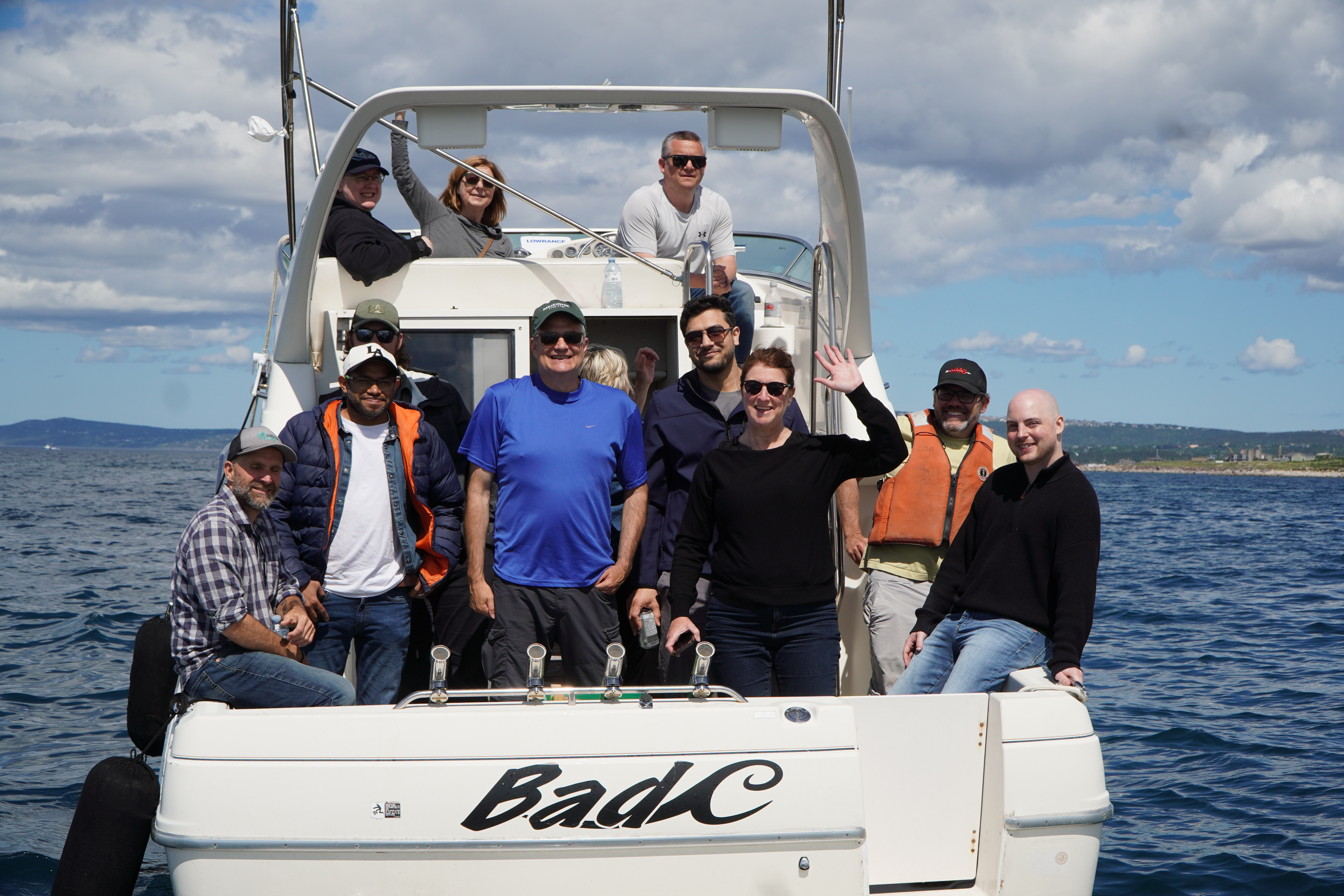
Our team just wrapped the in-person phase of Atlantic Canada's first aquaculture innovation studio in St Johns, Newfoundland – the opening chapter of a nine-month program delivered by Hatch Blue with Oceans Advance. The two-week intensive brought together ten early-stage aquaculture, aquatech and marine biotechnology companies spanning feed and animal health to emissions reduction, water treatment and marine circularity. The Studio closed with an inaugural Innovate Aquaculture industry day, bringing producers, technology partners, investors and the cohort into the same room.
A few things stood out from our time on the ground:
1. The industry's focus is broadening.
Aquaculture in Atlantic Canada has long been dominated by finfish, with salmon the core high-volume species. Fish health and feed for finfish are still front and centre, but the production base itself is widening as shellfish and seaweed farming are gaining ground, and there's growing interest in diversifying into other finfish species. What was a largely single-species industry is starting to look like a more varied one.
2. The technology coming out of the region is diverse.
Ten companies took part in our initial cohort. Three are turning waste into value: FinLeaf, NL Marine Organics and Atlantic BioCorp converting farm waste, mortalities and shrimp biomass into fertilizers and feed additives. Two are rethinking feed and fish health: Smallfood's fermented microalgae protein, EVAH Atlantic's in-feed sea lice treatment. Three are building on algae and seaweed: HoldfastNL, Clean Valley and BioLabMate. Rounding out the cohort: Acuicy's emissions software and EnviroBlu's biodegradable cleaner. A wide spread for a group this size.
3. Capital hasn't caught up yet.
The fundamentals are strong, and recent M&A at the top of the market proves it. But private capital into early-stage innovation remains limited. Non-dilutive funding is comparatively easy to access in Canada.It's the equity gap at seed and Series A that still pushes companies to raise outside the country.
Looking ahead
The next phase of the sector's growth won't be decided by capital or technology alone. One question kept coming up throughout the week: whether Atlantic Canada can make aquaculture a career its next generation actively wants to pursue. Judging by this cohort – the ambition and ability on show throughout the two weeks – the seeds are already there.
We'll keep working with these bright minds over the rest of the nine-month program, supporting the innovations they're building and their journey to get capital-ready. From here, we're already looking toward the next cohort, with an eye on broadening this model across Canada.
10 August 2026 by Dylan Terry, Innovation Studio Director
Related Posts
Where Is Capital Flowing in Norway’s Salmon Farming Landscape?
Maine: A Natural Hub for Blue Biotechnology
What It Will Take to Scale Seaweed Biostimulants