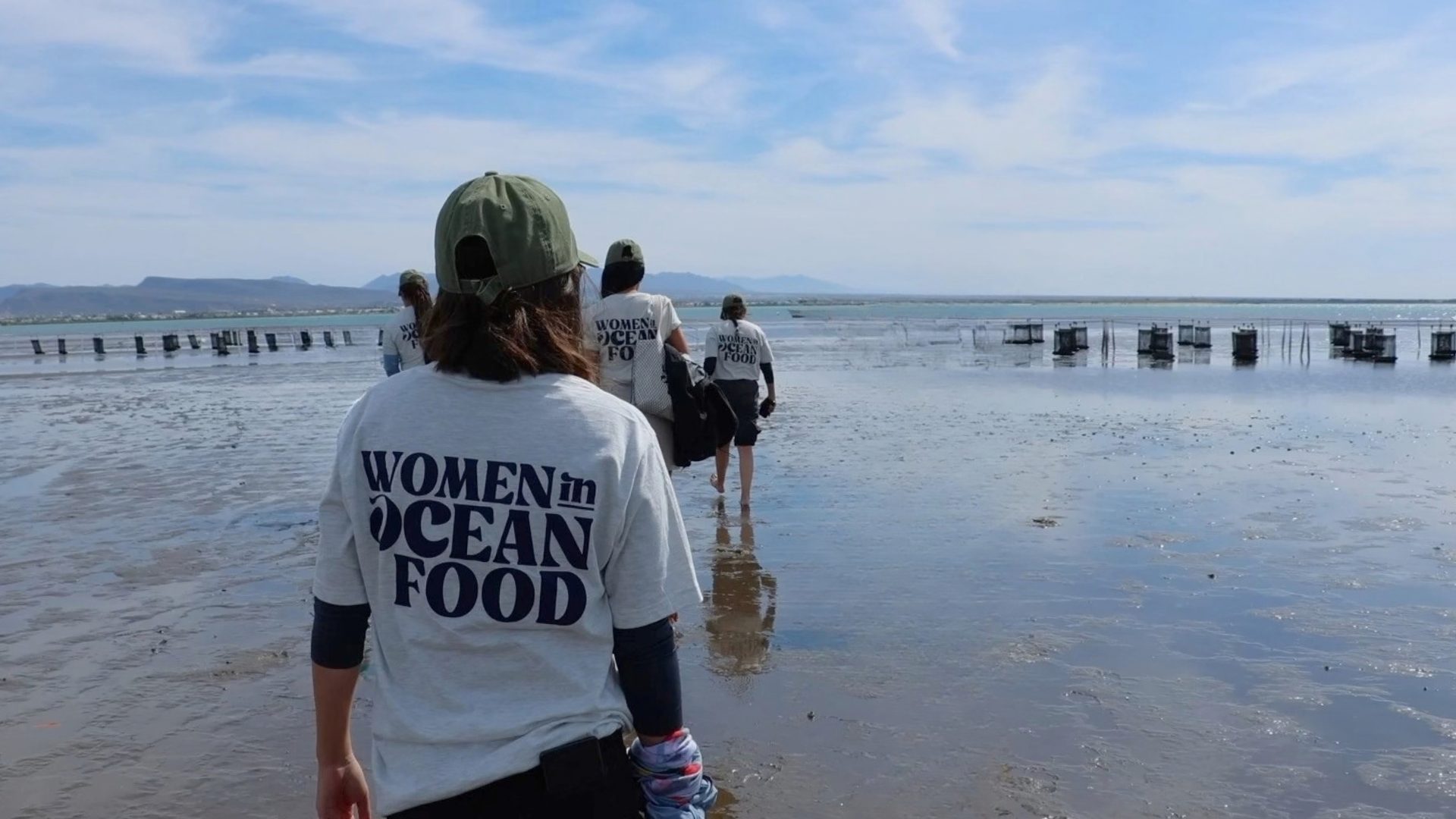
WIOF Latin America & Caribbean Innovation Studio Kicks Off in La Paz
.png)
The Women in Ocean Food innovation studio brings women-led ocean food ventures from across the Latin America and Caribbean region for a 10-day in-person program that kicks off a 12-month, equity-free support initiative to bridge the gap for female founders in the blue economy.
Launched in La Paz, Mexico on 26 January, the studio is targeted at women-led ventures advancing climate-positive solutions across aquaculture, marine biotech, seafood value chains, ocean conservation and blue carbon. Organised by Hatch Blue and Conservation International Ventures, the initiative is sponsored by Innovaciones Alumbra, Builders Initiative, Aquaculture Stewardship Council (ASC), Schmidt Marine Technology Partners, the Beyster Foundation for Enterprise Development and Sea Forward Fund.
"This Innovation Studio goes beyond the two weeks we spend together in the workroom. Since 2024, Women in Ocean Food has grown into a community where graduates continue to support one another; serving as mentors, meeting online or in person, and staying connected even when they live in different countries,” said Mariana Flores, Community Manager at Hatch Blue. “Throughout the year, we organize a range of activities so participants get the most value from being part of this select group of leaders. It’s such a rewarding experience to see them grow”
Over the past four Innovation Studios, 43 companies have graduated from more than 24 countries across Latin America and the Caribbean.
“Women are building some of the most compelling solutions in the ocean food system, yet they continue to face disproportionate barriers to capital and support,” added Gracie White, Director at Conservation International Ventures. “The Women in Ocean Food Innovation Studio is about closing that gap by providing practical, equity-free support to women-led ventures that are advancing climate-positive solutions across aquaculture, seafood value chains, and ocean conservation in the region.”
The participants in the new cohort come from a range of Latin American and Caribbean countries and cover a wide variety of fields – from converting invasive sargassum into clean fuel to AI-powered monitoring of marine ecosystems and bio-based solutions for industrial pollution.
The two-week innovation studio will culminate in a Community Day held in La Paz, Mexico; an opportunity to meet the founders and dive into their pitches. Interested parties are invited to join us in person in La Paz, Baja California Sur, Mexico, on Thursday, February 5, 2026. Details will be shared upon successful sign up to the event. Register your interest here
Meet the 10 participants:
ACUAPEZ, Yapacani, Bolivia. Born from a cooperative of fish farmers, ACUAPEZ produces locally made extruded aquafeed to meet regional shortages and fuel the growth of pacú (Colossoma macroponum), tambaqui (Piaractus brachypomus), pangasius and tilapia aquaculture.
Acústica Marina, Valdivia, Chile. Builds AI-powered smart buoy networks that monitor underwater noise, marine life, and ocean conditions in real time, supporting ports, aquaculture, and clean maritime projects across Latin America.
Bioproc, Concepcion, Chile. Develops modular, floating, low-energy microbial biodevices to treat agro-industrial and aquaculture wastewater, enabling water reuse while protecting rivers and coastal ecosystems.
EriSea / Promarine Antioxidants, Puerto Madryn, Argentina. Creates marine antioxidant supplements from unfertilized sea urchin roe using sustainable aquaculture and circular-economy approaches.
Hecho por Mujeres, Santa Fe de Yapacaní, Bolivia. Collective of 4 associations of women fish farmers transforming small fish into value-added products like SabroPez, a dehydrated and milled fish powder.
Nereuz, Lima, Peru. Develops AI-powered monitoring tools for aquaculture, automating stock assessment and biomass estimation to boost efficiency and reduce environmental impact.
Piscicola La Zunilda, Puerto Lleras, Colombia. Produces and sells fresh red tilapia using bio-RAS (recirculating aquaculture technology), raising fish without chemicals and optimizing water use.
Regenerative Enterprise, La Paz, Mexico. Co-grows game-changing aquaculture inputs and eliminates nitrogen pollution from aquaculture farms through proprietary mangrove agroforestry systems.
Rum and Sargassum, St. James, Barbados. Converts invasive sargassum seaweed into renewable transportation fuel and offers car retrofits to run on this fast-fueled clean energy.
TIDE, Isla de Margarita, Venezuela. Cultivates Kappaphycus alvarezii seaweed and produces Green Tide, a 100% organic seaweed-based bio-stimulant for agriculture.
Related Posts
The North Atlantic Blue BioTech Summit returns to Portland, Maine, in March 2027

New Hatch Blue report maps barriers and opportunities for investment in U.S. aquaculture
Hatch Blue and UMITO Partners partner to launch a first-of-its-kind aquaculture innovation studio in Japan